e-Factura
1. Overview
It is possible to send the invoice content with a special type of file (xml) to ANAF.
Sending invoices is mandatory, starting 1.07. 2022, for the following transactions:
B2G (business-to-government) transactions.
B2B (business-to-business) transactions containing at least one ‘high risk’ element.
B2C (business-to-consumer) transactions with holiday vouchers payment method.
Attention: As of January 1, 2024, the e-Factura system becomes mandatory for all VAT-registered companies in Romania and as of January 1, 2025, all B2C transactions must be sent to the e-Factura system.
1.1. General considerations
EBS installation version should be at least 5.8.0.1, or newer.
Each time, get and install the latest hotfixes
Some of the configurations are common with SAF-T.
1.2. New coding for counties
These can be found in the menu: Tools & Configuration > Personalization > People > Address data > Counties
It is mandatory and the Addresses column must be completed.
If SAF-T has already been set up, this step is no longer necessary as it is also included in that instruction.
This column contains the code of each county in RO and can be different from the one used for the D394 declaration.
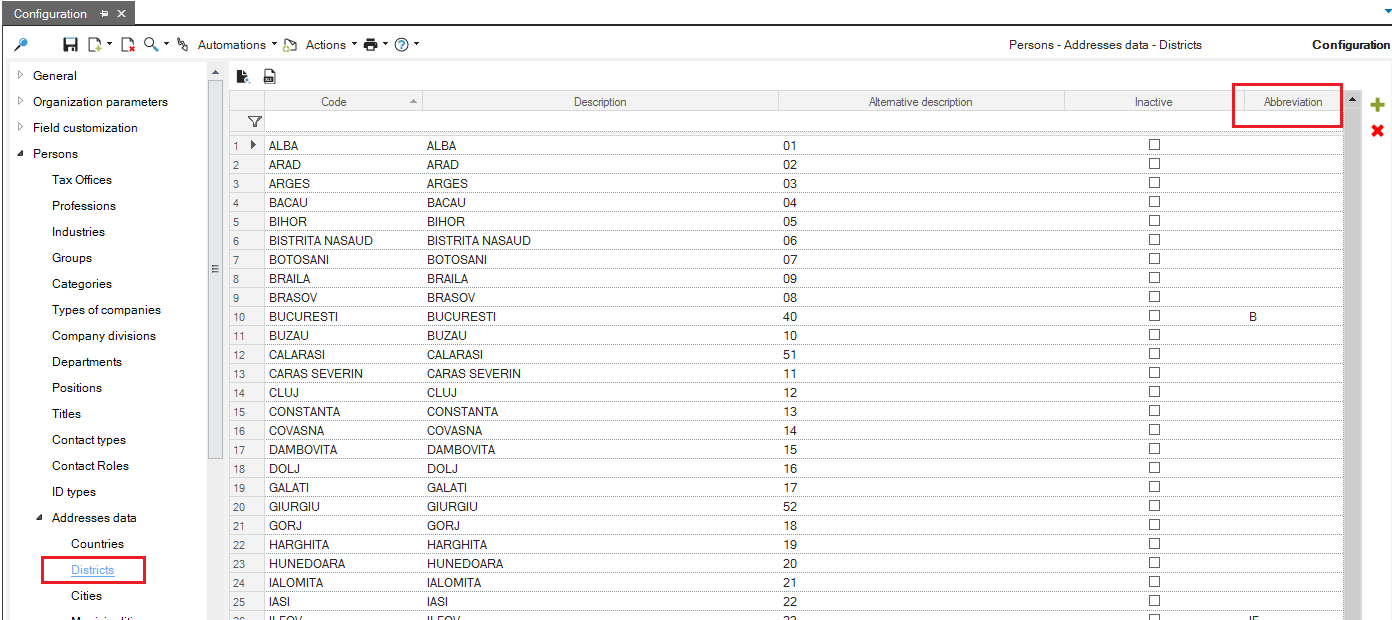
Information can be added manually or by running an .emi
There is an .emi that we can use to update that column.
1.3. Company Person Card
A first step is to verify the information entered on the company’s person card. To avoid errors, it is advisable to make sure that the following details are mentioned:
VAT type,
Commercial Register registration number,
Address: postal code / town / (zone/sector) / county / country,
Main bank account,
E-mail address.
Attention: A service restart is required for any changes.
2. Company parameters
In the category ΑNAF Services and Declarations new parameters have been added for entering all the necessary authentication data to communicate with ANAF services for e-invoice:
BIT Services - Connection Key (Api Key). Provided by BIT Software.
It is the same for SAF-T.E-Factura - Organization Information. Click the three dots and in the pop-up window all fields must be completed. If a field is not complete, you should go back to the company person and fill in the missing information. Not in the pop-up window.
Entersoft web API - connection key. It is necessary that the client has a subscription in ES API and add the application Entersoft RO ANAF e-Factura. After that we create an endpoint key and it automatically fills in the parameter.
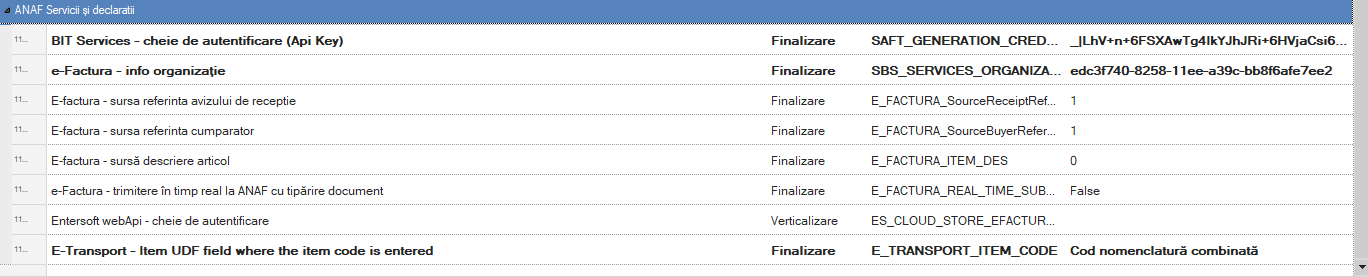
We first finalize the BIT services - authentication key (Api Key) and press save.
It is necessary to restart the service.Fill in E-Factura - Organization Information and press save.
A restart of the service is required.Configure the subscription in ES Cloud and create the EndPoint;
*)instructions for creating a subscription in ES Cloud are detailed in the EBS-Cloud_Subscription_EN.pdf manual.
There are other parameters in the same section that manage:
- real-time e-Factura transmission to ANAF
This parameter will control whether the invoice will automatically go to ANAF or not.
It is recommended to keep the default value = FALSE. This means that the user will press the button to send the invoice.
UDF field of the document type where the CPV code is declared (related to BT-158) This parameter requires configuration under the following conditions:
B2G transactions are involved;
The CPV code of an item is not the same in all transactions.
Customer receipt source (related to BT-158);
Buyer reference source (BT-10 related);
Item description source (related to BT-153 and BT-154).
La categoria Implementare parametri definiți, se vor utiliza:
Număr 10 (aferent BT-153 și BT-154, cazul serviciilor);
Număr 8 (aferent BT-127).
3. Document series
In the series of documents involved in the electronic invoice, select the relevant values in the following fields:
Electronic Invoice. Select the value By Vendor.
Transaction type. Select one of the values B2B or B2G, as appropriate.
Only document series with the above values can be sent to ANAF.
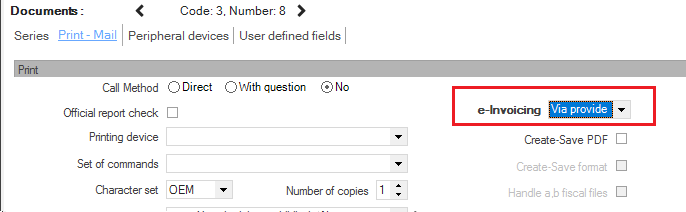
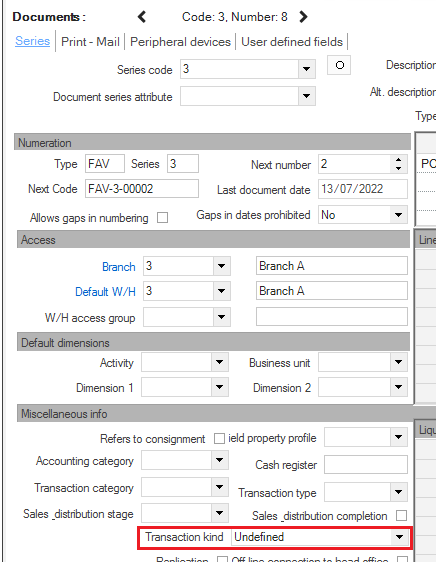
You can use bulk modification to mass update more than one series of documents.
Warning: if the series has Direct Call Method, when we parametrize the series and the user registers a document, it will be automatically uploaded to ANAF. For any modification a re-cache is required.
4. Document types
For the document types involved in e-Factura, select the value in the SAF-T Invoice Type field, to be sent to the Invoice Type field of the file.
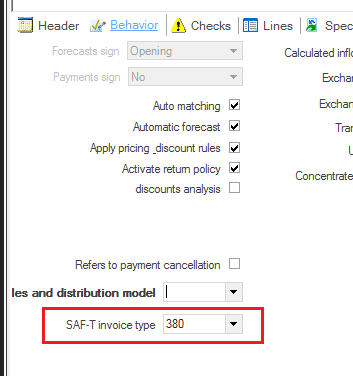
You can use bulk modification to mass update multiple document types.
If the values do not exist, manually open the values in the table:
Configuration and Tools > Configuration… > Documents and Series > Standard Audit File - SAF-T > Invoice Type

A re-cache is required for any changes.
5. Sectors
Another column that is mandatory and should be filled in is the Area Description column.
These can be found in Configuration and Tools > Configuration… > People > Address data > Postal codes
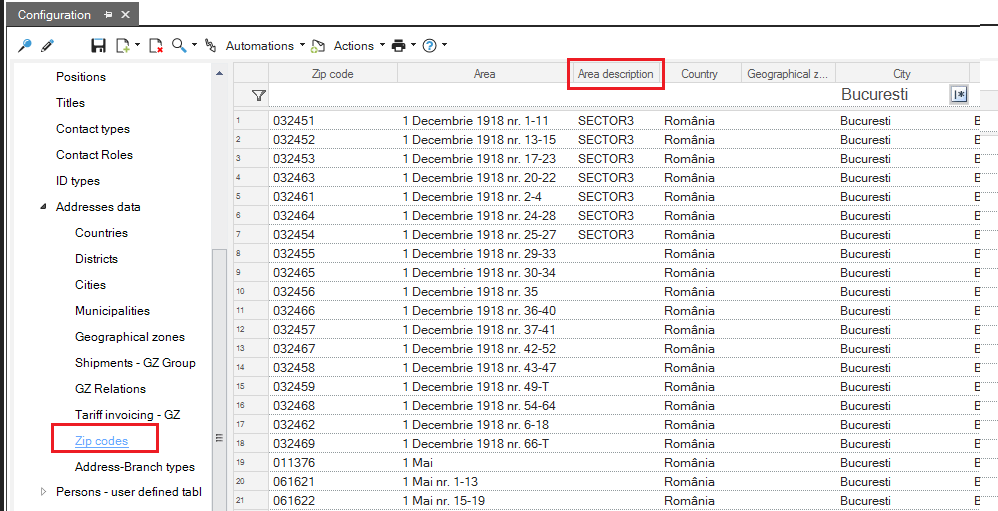
In that column we fill in the Sector only for ZIP Codes where the city is Bucharest.
The possible values are:
SECTOR1,
SECTOR2,
SECTOR3,
SECTOR4,
SECTOR6,
SECTOR6.
6. Customer card
For each customer for which we have a B2B or B2G transactions the following fields must be filled in:
VAT
Address: postcode, city, zone, district, country.
7. Currency
The currency code LEU should exist and the ISO code should have RON.
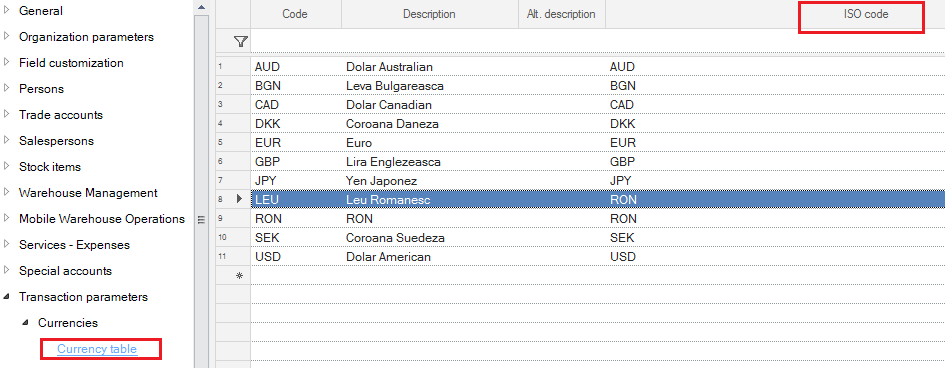
Warning: A service restart is required.
8. Item card
The user must fill in the following fields for items, as applicable:
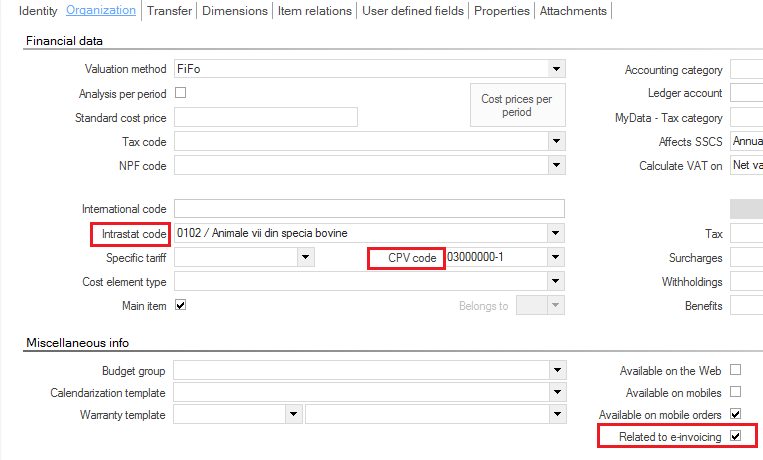
Intrastat Code. For transactions categorized as B2B, the Intrastat code for all items used in the transactions must be filled in the document field of the same transaction type.
Related to e-invoicing. Any item must have this field selected.
CPV Code. For transactions that have been categorized as B2G, the document field of the same transaction type must be filled in with the CPV code, for all items used in this type of transaction.
9. CPV codes
The CPV (Common Procurement Vocabulary) code is a numerical symbol specific to a particular product or service. The CPV code establishes a single classification system for public procurement with the aim of standardizing the references used by contracting authorities and entities to describe the subject matter of public procurement contracts (B2G). The use of CPV has been mandatory in the European Union since February 1, 2006. CPV codes are used in contract award documentation and in electronic public procurement platforms, such as SEAP in Romania.
We should run an .emi to populate the table with all possible CPV codes.
There is an .emi that can be used to import the list of CPV codes.
After that, the CPV codes need to be added at item level.
Below are some links we recommend for further help.
https://eur-lex.europa.eu/legal-content/EN/TXT/?uri=CELEX:32008R0213
http://anap.gov.ro/web/wp-content/uploads/2019/02/Reclasificare-coduri-CPV.pdf
10. Customer codes and item descriptions
The automation that created the .xml to ANAF exports the first non-null value for the item description (chap. 16. BT-15) based on the following sequence:
Multiple Codes (StringField 1 = EBS Customer Code, Description = Item Description)
Article related persons (Comment 1 = Article Description)
Item description
The automation that created the xml to ANAF exports the first non-null value for article code (chap. 16. BT-156) based on the following sequence:
Multiple Codes (StringField 1 = EBS Customer Code, Code = Item Code)
Article related persons (Code = Article Code)
Product code
11. ANAF - Accountant Authorization
Together with the client’s accountant, we should proceed with authorization by using the USB device (token) for authentication with ANAF, which each client has.
We connect to the ANAF website from the accountant’s computer using their token.
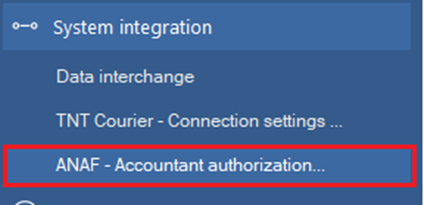
From the menu, select ANAF Authorization – Accountant and click Authorize.
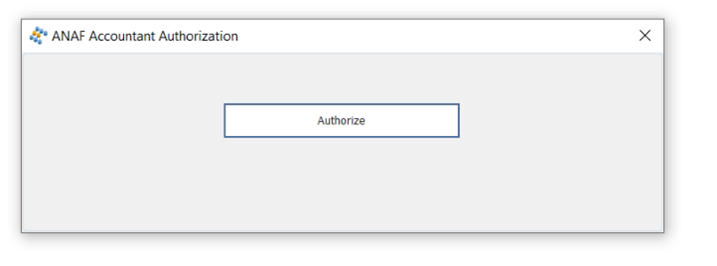
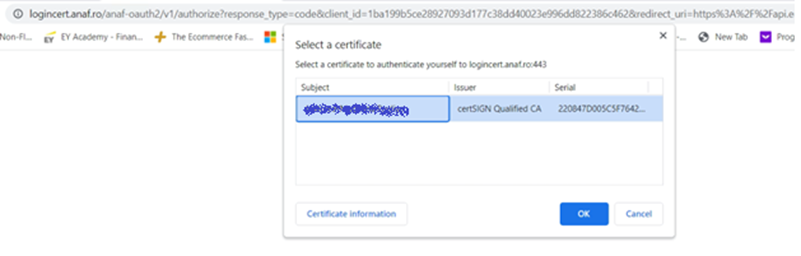
The application will open your browser and ask you to select the certification under that user.
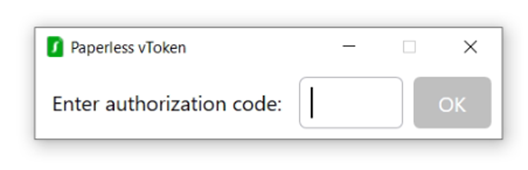
If successful, we receive the following message:
12. Transaction kind
In the document forms we have to make visible the Transaction kind field and also and in the scroller with the Sales Invoices.

13. Sent invoices - e-Factura outbound
The main screen for the management of the sent (outbound) invoices is done via the scroller accessible from the Sales > e-Factura - Management of sales invoices menu.
All transaction documents to be sent to the ANAF are displayed here.
The documents are grouped according to their dispatch status:
Failure - Sent but failed due to errors
Success - Delivery was successfully completed
To be sent - Not yet sent.
Pending - Has been sent but is still being processed by ANAF.
For any documents that have not been sent due to errors, the user can display the errors by clicking on the Errors field.
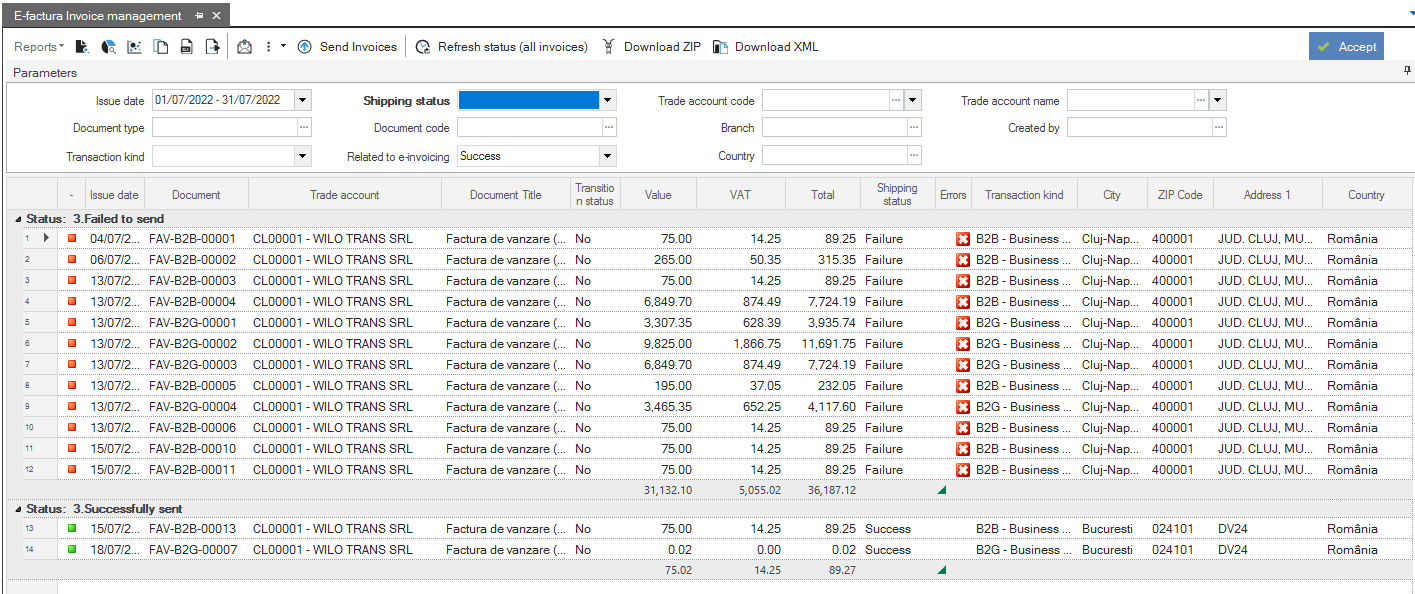
The following Actions are available to manage pending documents and documents that have not been sent due
to an error:
Send Invoices - Send a document that could not be sent.
Refresh status - Update the delivery status of all documents in the pending state.
Download Zip - If a document fails to send, you can download the file to disk, along with a full report of its errors. Useful when contacting support.
Download XML - If an invoice is rejected by ANAF, you can download the generated file that failed to be sent.
13.1. Retrieving the CPV code
Starting with version 5.14.0.0, the CPV code retrieval mode has been extended due to the introduction of the CPV Code field in document lines.
At the same time, in the parameters area, we have a new parameter MARK_CPV_CODE - go to menu: Configuration and Tools > Customization… > General > Company parameters > Online transaction parameters: UDF field of the document line where the item CPV code is declared.
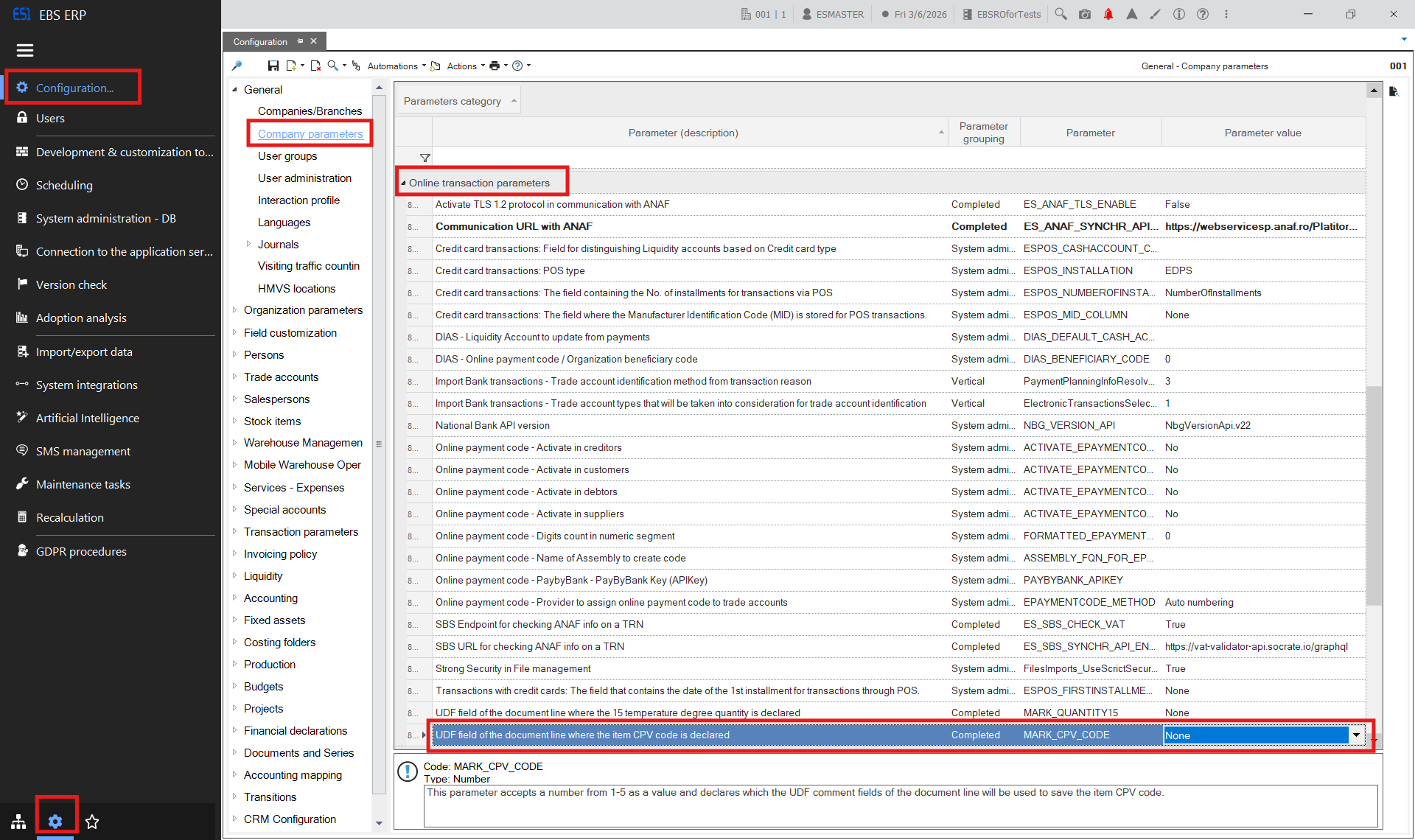
Depending on the value of the MARK_CPV_CODE parameter, the retrieval mechanism is as follows:
If set to None, the CPV code will be taken from the document line.
If set with Comment 1 to Comment 5, it will be taken from the lines in the document (fields Comment 1 to Comment 5).
However, if nothing is filled in the corresponding comment, the CPV code from the document line will be taken.
13.2. Special cases
13.2.1. Invoices with total VAT value 0
Self-invoices from suppliers who are not VAT payers,
Reverse charge invoices (e.g., recyclable packaging invoices)
Sales invoices exempt with/without deduction rights or non-taxable (the information in Table 5 differs).
For all of the above cases, the reason for VAT exemption is mandatory.
This may be:
If the supplier is a non-payer, the reason is VATEX-EU-O.
If it is a reverse charge sale, the reason is VATEX-EU-AE and the VAT regime on the document must be Exemption.
If it is a VAT-exempt sale (for other reasons), one of the reasons from the list can be selected, but the VAT regime must be Exemption and Table 5 must be completed correctly for VAT journal calculation.
13.2.2. Invoices with VAT category 0 lines
Although EBS does not allow the registration of an invoice with Normal VAT and lines with both 0 and non-zero VAT categories, for sales journal reasons, such cases may still arise.
In these cases, no reason for exemption shall be provided.
13.2.3. Recyclable packaging invoices
(VAT category 1 and VAT exemption regime) + special environmental tax account (excluding VAT).
13.3. Restrictions on sent invoices
Once an invoice has been successfully sent to ANAF, any changes to the invoice will produce an error. This is when the status of the invoice is Successful not the fact that it has received the Charge ID.
Verification is only done on the fields considered by EBS to be official ID data.
It is not part of this verification:
User defined fields
Business dimensions (Business Unit, Activity, Dimension1, Dimension2, Project)
Variations stock items (Lot, Serial Number, Color, Size, Dimension1, Dimension2)
Other informative fields (Alternative Argumentation, Development Step, Means of Transportation, Task etc).
In order to allow some changes for a specific group of users, it is necessary to create a document access profile by accessing the Configuration and Tools > Customize… > Documents and Series > Document access rights profile menu.
14. Received invoices - e-Factura inbound
Starting with version 5.8.0-1, the e-Factura functionality has been extended to receive SPV invoices from suppliers.
The functionalities covered are the following:
Download supplier invoices,
Download invoices list report,
Bulk saving of invoices in .pdf, .xml. and .zip format in a user selected path,
Correlate invoice downloaded from SPV with invoice already registered in EBS,
Create a new document with header data retrieval.
A new report has been added to the Purchasing & Procurement > e-Factura - inbound invoices management menu.
In addition to displaying the downloaded data, the report contains the following options:
Automation for downloading supplier invoices,
List of downloaded invoices and link (if any) to invoices already registered,
Automations to download invoices in .pdf, .zip, .xml format.
The report contains the following filter parameters:
Invoice issue number and date,
Invoice loading date,
Supplier CUI,
Supplier.
The report displays the following information;
Invoice number and date,
SPV ID and charge date,
CUI and supplier name,
Currency, values,
Upload date in EBS.

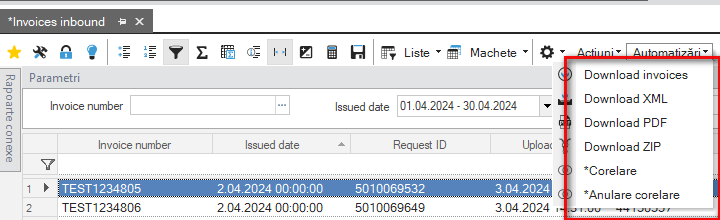
The following Actions can be executed through the available automations:
- Download invoices - Download received invoices to EBS.
The automation parameters are Start date and End date for uploading invoices to SPV.
After running the automation, the report will display the invoices as selected.
Even if run multiple times over a period of time, invoices are only loaded once.
As a result of running this automation, some downloaded invoices may appear in the list with the Core check mark and an EBS document number already recorded.
The criteria by which it attempts to identify a document in the EBS are as follows:
Current company,
Trading partner with CUI similar to the one received (can be with/without RO),
Alternative document EBS = Supplier invoice number,
Alternative document date = Vendor invoice date,
Net amount = TaxExclusiveAmount or Total amount = TaxInclusiveAmount.
14.1. Download .xml
The invoice is exported in .xml format.
If the user selects a single invoice, a new screen will open with the following fields:
filename, automatically prefilled,
file path - the user will fill in the path.
If the user selects multiple invoices, the screen that will open will contain only the path that the user needs to fill in/select for the bulk saving of the invoices.
The pre-filled name of each invoice file has the following format:
Company,
Supplier name,
Invoice number,
Invoice date,
SPV ID.
14.2. Download .pdf
Export invoice in .pdf format.
The functionality is similar to the previous one (for saving .xml).
14.3. Download .zip
Export invoice in .zip format.
The functionality is similar to the previous ones (for saving .xml, .pdf).
The .zip archive contains the .xml file of the invoice and the .xml file with the signature from the SPV.
14.4. Correlations
The automation allows “matching/linking” invoices received from the SPV with invoices already registered in EBS.
In the selection screen, the supplier will be pre-filled from the line on which the cursor is positioned.
In the Documents field, select the invoice to be linked to. Only uncorrelated invoices are already displayed.
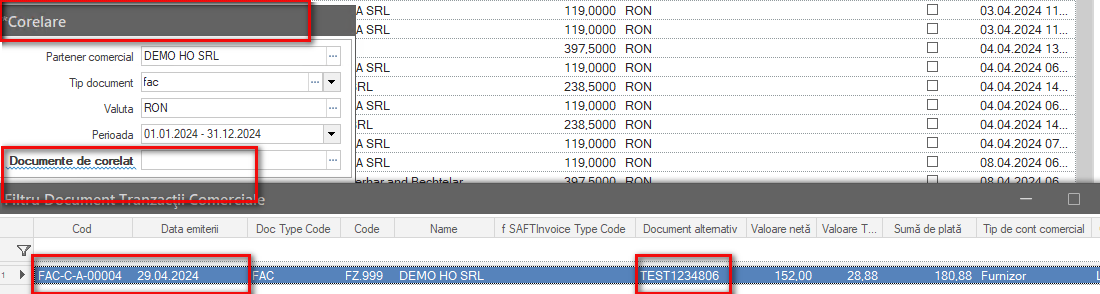
Once the automation is completed, the document number in the EBS will already be displayed in the report.
14.5. De-correlations
The automation allows you to de-match an invoice registered in EBS with one downloaded from SPV.
The purpose may be to re-match the invoice from the SPV with another document already recorded in the EBS.
14.6. Create document
If the invoice is not yet registered in EBS, the automation allows opening a new document directly from the report.
The document type will be chosen.
The following data are pre-filled:
Supplier code,
Document Date - date of upload to SPV (but can be changed),
Alternative document date - date issued by the supplier,
Invoice number - invoice number from the supplier.
The other invoice information is filled in as usual (items, quantities, prices).
Once the document has been saved, it will be automatically matched to the invoice in the SPV from which the automation was started.
14.7. e-Factura information received in other scrollers of interest
Starting with version 5.14.0.0, the functionality for downloading and correlating/decorrelating invoices received from SPV has been extended to the Purchases/Receipts scrollers (menu: Purchases & Procurement > Receipts & Purchase invoices > Purchases/Arrivals ) and Expense Documents (menu: Accounting > Expenses > Expense documents).
Three new automations are available in these:
Download e-Factura invoices
e-Factura correlation
De-correlation
The automation for Download invoices is identical in terms of functionality to that existing in the e-Factura - Management of purchase invoices scroller. More specifically, invoices received from SPV are stored in the database without, however, being correlated with invoices already registered in EBS.
The e-Factura correlation automation allows one or more selected invoices to be matched with a single invoice received from SPV. The list of invoices in SPV contains only those invoices that have not already been correlated with an invoice in EBS.
The De-correlation automation “unlinks” the SPV invoice from the invoice(s) in EBS.
These scrollers have also been expanded by adding three new columns:
e-Factura document: supplier’s invoice number;
RequestID: e-Factura ID downloaded from SPV;
Correlated: indicates whether the invoice in EBS is correlated with a document in SPV.
These columns are initially hidden, but can be displayed in the scroller by right-clicking on the column header and selecting the Add/Remove Columns command.
The three columns are updated through the specific e-Factura automations mentioned above.
15. Source fields eFactura
To view how to fill in the form manually in SPV, please use the link below:
https://www.anaf.ro/CompletareFactura/faces/factura/informatiigenerale.xhtml
BT-1 Invoice number
The unique document number from EBS (ADCode) is transmitted.
BT-2 Invoice issue date
The date of registration of the document (ADRegistrationDate) is transmitted.
The section in xml where the field appears is: /Invoice/cbc:Issued.
BT-3 Invoice type code
The SAFT document type is transmitted from the series or, if there is no value, from the Document type.
Possible values:
380 – Standard invoice
381* – Credit note
384 – Correction invoice
389 – Self-invoicing
The section in xml where the field appears is: /Invoice/cbc:InvoiceTypeCode.
The invoice type affects the overall sign of the document.
With the exception of type 381, all invoice types are interpreted by ANAF exactly as transmitted, regardless of the sign.
The sign transmitted in xml can be:
380 – plus or minus;
381 - more;
three hundred and eighty-four – less;
389 – plus or minus.
From the EBS application perspective, the document sign, as a functionality for the VAT declaration, comes from the Transaction category*, set at the document type level.
*) There are exceptional cases where this field is not filled in even though the invoice is sent to SPV.
The transaction category can be:
01 – Invoice with surplus;
02 - Debit note;
03 – Credit note (negative invoice).
Therefore, in order to avoid changing the current settings, this field will be sent as follows:
If it is 380 and the transaction category is 01/02 or not filled in: code 380 and positive sign;
If it is 380 and the transaction category is 03 - code 380 and negative sign;
If it is 381 - code 381 and positive sign;
If it is 384 - code 384 and negative sign;
If it is 389 and the transaction category is 01/02 - code 389 and positive sign;
If it is 389 and the transaction category is 03 - code 389 and negative sign.
BT-5 Invoice currency code
The ISO code of the currency of the document is transmitted. This affects whether or not the BT-111 field is transmitted. If RON is specified here, the BT-111 field is not transmitted in the e-Invoice.
The section in xml where the field appears is: /Invoice/cbc:DocumentCurrencyCode
BT-6 Invoice currency code of VAT
Transmit RON.
The section in xml where the field appears is: /Invoice/cbc:TaxCurrencyCode.
BT-7 Invoice VAT date effective
The first non-zero value between the Delivery Date and the Document Date is transmitted;
The section in xml where the field appears is /Invoice/cbc:TaxPointDate.
BT-9 Payment due date
Either the first due date (in the Payment Order tab or Trade Bills tab) or the document date (if the remaining total to be paid is 0) is sent.
The section in xml where the field appears is: /Invoice/cbc:Due or /CreditNote/cac:PaymentMeans/cbc:PaymentDueDate.
Starting with version 5.13.0.0, a new parameter in the ANAF services and declarations section, E_FACTURA_DueDate_Source, will allow the selection of the date used for this field.
Possible values are:
0 – current method (i.e., either the earliest due date* in the Payment Order/Commercial Paper tab) or the document date (if the payment amount of the document is 0);
1 – the earliest estimated date** in the Payment disposition or document date table (if the total amount is 0).
*) Due date = Valeur Date.
**) Estimated date = Collection Date.
BT-10 Buyer Reference
This field must contain the supplier code for the customer to whom the invoice is issued.
Since there is no dedicated field for this information, the field will be filled in either in one of the UDF fields on the customer card or in the invoice header.
To determine the field from which the information will be retrieved, set the new parameter in the ANAF services and declarations area E_FACTURA_SourceBuyerReference.
Possible values range from 1 to 19 with the following meanings:
Values from 1 to 10 correspond to the Comment 1 to 10 field on the customer card;
Values from 11 to 15 correspond to Comment fields 1 to 5 in the document header;
Values from 16 to 19 correspond to fields Table 1 to Table 4 in the document header.
The section in xml where the field appears is: /Invoice/cbc:BuyerReference.
BT-11 Project Reference
The source is the alternate code of the project selected on the document.
The section in xml where the field appears is: /Invoice/cac:ProjectReference/cbc:ID.
BT-12 Contract reference
The source is the alternative code of the contract selected on the document.
The section in xml where the field appears is: /Invoice/cac:ContractDocumentReference/cbc:ID.
BT-13 Purchase order reference
The source is an alternative document from the invoice header or one of the user-defined fields (Comment 1 to 5), depending on the value of the parameter E_FACTURA_SourcePurchaseOrderReference_BT13:
0 – Alternative document;
1 – Comment 1;
2 – Comment 2;
2 – Comment 3;
3 – Comment 4;
4 – Comment 5.
The section in xml where the field appears is: /Invoice/cac:OrderReference/cbc:ID.
BT-14 Sales order reference
The source is the Reference Document field (ConcerningDocCode*) in the Information tab. It must always be the COV number or the first document registered as an order in EBS.
Considering that existing transitions do not inherit this field by default, the implementation proposal is:
The first transition from a command (COV/CVR) copies the ADCode field from the source to DocConcerningCode in the destination.
All other transitions should take DocConcerningCode from source to destination.
This is also useful in other cases, especially when reports on orders are requested and the flow is very long. Having a field across the entire flow that indicates the initial order is extremely useful.
The section in xml where the field appears is: /Invoice/cac:OrderReference/cbc:SalesOrderID.
BT-15 Receipt reference
This field must contain the receipt number provided by the customer to whom the invoice was issued.
Since there is no dedicated field for this information, one of the UDF fields in the document header will be used.
To determine the field from which the data will be retrieved, set the parameter E_FACTURA_SourceReceiptReference to a value between 1 and 5.
Each value corresponds to a Comment from 1 to 5 in the header.
The section in xml where the field appears is: /Invoice/cac:ReceiptDocumentReference/cbc:ID.
BT-16 Despatch Note Reference
The field Relative document is taken over.
The section in xml where the field appears is: /Invoice/cac:DespatchDocumentReference/cbc:ID.
BT-20 Payment terms
The description of the payment method in the document is transmitted.
The section in the XML where the field appears is: /Invoice/cac:PaymentTerms/cbc:Note.
BT-22 Invoice note
The Comment, argumentation, or alternative argumentation field from the document header is transmitted, depending on the value of the E_FACTURA_SourceInvoiceNote_BT22 parameter:
0 - Comment;
1 - Argumentation;
2 – Alternative argument.
The section in xml where the field appears is: /Invoice/cbc:Note.
BT-27 Seller’ name
Transmitted:
Name of the company representative if it is a sales document;
Name of the supplier if it is an invoice issued by the taxable person as the beneficiary (self-invoice).
The section in xml where the field appears is: /Invoice/cac:AccountingSupplierParty/cac:Party/cac:PartyLegalEntity/cbc:RegistrationName.
BT-28 Seller’ trade name
Transmitted:
Name of the company representative if it is a sales document
Name of the supplier if it is an invoice issued by the taxable person as the beneficiary (self-invoice).
The section in xml where the field appears is: /Invoice/cac:AccountingSupplierParty/cac:Party/cac:PartyName/cbc:Name
sau /CreditNote/cac:AccountingSupplierParty/cac:Party/cac:PartyName/cbc:Name.
BT-29 Seller identifier
The seller’s GLN is taken from the main company address or the main supplier address, if it is a self-invoice.
The section in xml where the field appears is: /Invoice/cac:AccountingSupplierParty/cac:Party/cac:PartyIdentification/cbc:ID.
BT-30 Seller legal registration
The seller’s Trade Reg. No. (own company or supplier) is taken over.
The section in the XML where the field appears is: /Invoice/cac:AccountingSupplierParty/cac:Party/cac:PartyLegalEntity/cbc:CompanyID.
BT-31 Seller VAT identifier
The company’s own CUI or the supplier’s CUI is used if it is a self-invoice issued by the taxable person as the beneficiary.
The section in xml where the field appears is: /Invoice/cac:AccountingSupplierParty/cac:Party/cac:PartyTaxScheme/cbc:CompanyID.
Note: The field is not transmitted at all if the reason for exemption is VATEX-EU-O (according to ANAF specifications).
BT-33 Additional legal information about the Seller
The company type field (SA, SRL, etc.) is taken from your own company or supplier.
The section in xml where the field appears is:
/Invoice/cac:AccountingSupplierParty/cac:Party/cac:PartyLegalEntity/cbc:CompanyLegalForm.
BT-35 Seller street name
The seller’s address 1 is taken from the main company address or the main supplier address, if it is a self-invoice.
The section in the XML where the field appears is: /Invoice/cac:AccountingSupplierParty/cac:Party/cac:PostalAddress/cbc:StreetName.
BT-36 Seller additional address
The seller’s address 2 is taken from the main company address or the main supplier address, if it is a self-invoice.
The section in the XML where the field appears is: /Invoice/cac:AccountingSupplierParty/cac:Party/cac:PostalAddress/cbc:AdditionalStreetName.
BT-37 Seller city
The seller’s city is taken from the company’s main address or the supplier’s main address, if it is a self-invoice.
The section in the XML where the field appears is: /Invoice/cac:AccountingSupplierParty/cac:Party/cac:PostalAddress/cbc:CITYNAME.
BT-38 Seller postal code
The seller’s postal code is taken from the company’s main address or the supplier’s main address, if it is a self-invoice.
The section in the XML where the field appears is: /Invoice/cac:AccountingSupplierParty/cac:Party/cac:PostalAddress/cbc:PostalZone
sau /CreditNote/cac:AccountingSupplierParty/cac:Party/cac:PostalAddress/cbc:PostalZone.
BT-39 Seller country subentity (judet)
The abbreviation of the seller’s county is taken from the main company address or the main supplier address, if it is a self-invoice.
The section in xml where the field appears is: /Invoice/cac:AccountingSupplierParty/cac:Party/cac:PostalAddress/cbc:CountrySubentity.
BT-40 Seller country
The ISO code for the seller’s country is taken from the main company address or the main supplier address, if it is a self-invoice.
The section in the XML where the field appears is: /Invoice/cac:AccountingSupplierParty/cac:Party/cac:PostalAddress/cac:Country/cbc:IdentificationCode.
BT-42 Seller contact phone
The phone number is taken from the company’s main address.
The section in xml where the field appears is: /Invoice/cac:AccountingSupplierParty/cac:Party/cac:Contact/cbc:Telephone.
BT-43 Seller contact email
The email address set at the interlocutor level in the document header is retrieved.
The section in xml where the field appears is: /Invoice/cac:AccountingSupplierParty/cac:Party/cac:Contact/cbc:Telephone.
BT-44 Buyer’s name
The name of the buyer (your own company, if it is a supplier self-invoice, or the customer in the document) is taken.
The section in xml where the field appears is: /Invoice/cac:AccountingCustomerParty/cac:Party/cac:PartyLegalEntity/cbc:RegistrationName.
BT-45 Buyer’s trade name
The name of the buyer (your own company, if it is a supplier self-invoice, or the customer in the document) is taken.
The section in xml where the field appears is: /Invoice/cac:AccountingCustomerParty/cac:Party/cac:PartyName/cbc:Name.
BT-46 Buyer identifier
The GLN of the buyer’s main address is taken (business partner document or company, if it is a supplier self-invoice).
The section in xml where the field appears is: /Invoice/cac:AccountingCustomerParty/cac:Party/cac:PartyIdentification/cbc:ID.
BT-47 Identifier for a legally registered Buyer
The buyer’s Trade Reg. No. is taken (business partner document or company, if it is a supplier self-invoice).
For individuals, if the CNP is filled in on the person’s card, it will be transmitted. Otherwise, the fixed value 0000000000000 will be transmitted.
The section in xml where the field appears is: /Invoice/cac:AccountingCustomerParty/cac:Party/cac:PartyLegalEntity/cbc:CompanyID.
BT-48 Buyer’s tax identifier
The buyer’s CUI (business partner document or company, if it is a supplier self-invoice) is taken over.
The section in xml where the field appears is: /Invoice/cac:AccountingCustomerParty/cac:Party/cac:PartyTaxScheme/cbc:CompanyID.
BT-50 Buyer address line 1
The Address 1 field is taken from the main address of the customer or company, if it is a supplier self-invoice.
The section in the XML where the field appears is: /Invoice/cac:AccountingCustomerParty/cac:Party/cac:PostalAddress/cbc:StreetName.
BT-52 Buyer city
The city is taken from the customer’s or company’s main address - for supplier invoices (for Bucharest, the description of the area from the postal code of the main address).
The section in the XML where the field appears is: /Invoice/cac:AccountingCustomerParty/cac:Party/cac:PostalAddress/cbc:CITYNAME.
If the postal code is not filled in on the customer’s card, for customers in Bucharest, it will be filled in as SECTOR1, SECTOR2, etc.
BT-53 Buyer postal code
The Postal Code field is taken from the main address of the customer or company, if it is a supplier self-invoice.
This field is not mandatory.
The section in xml where the field appears is: /Invoice/cac:AccountingCustomerParty/cac:Party/cac:PostalAddress/cbc:PostalZone.
BT-54 Buyer county
The abbreviation of the county corresponding to the main address of the customer or your own company is taken (for supplier self-invoices).
The section in xml where the field appears is: /Invoice/cac:AccountingCustomerParty/cac:Party/cac:PostalAddress/cbc:CountrySubentity.
BT-55 Buyer country
The ISO code of the country corresponding to the main address of the customer or your own company is taken.
The section in xml where the field appears is: /Invoice/cac:AccountingCustomerParty/cac:Party/cac:PostalAddress/cac:Country/cbc:IdentificationCode.
BT-57 Buyer’s contact phone
The phone number is taken from the business partner’s address in the document.
The section in xml where the field appears is: /Invoice/cac:AccountingCustomerParty/cac:Party/cac:Contact/cbc:Telephone.
BT-58 Buyer’s contact email address
The email address is taken from the Interlocutor field in the document header.
The section in xml where the field appears is: /Invoice/cac:AccountingCustomerParty/cac:Party/cac:Contact/cbc:ElectronicMail.
BT-70 Shipping on Behalf of a Party
The name of the recipient is taken (it may be different from the customer itself).
The section in xml where the field appears is:
/Invoice/cac:Delivery/cac:DeliveryParty/cac:PartyName/cbc:Name
sau /CreditNote/cac:Delivery/cac:DeliveryParty/cac:PartyName/cbc:Name.
BT-71 Delivery location Identifier
The GLN delivery address is taken over.
The section in xml where the field appears is: /Invoice/cac:Delivery/cac:DeliveryLocation/cbc:ID.
BT-72 Actual delivery date
The delivery date is taken from the document or the date of issue (if the delivery date is NULL).
The section in xml where the field appears is: /Invoice/cac:Delivery/cbc:ActualDeliveryDate.
BT-75 Delivery address, line1
The Address 1 field corresponding to the delivery address in the document is retrieved.
The section in the XML where the field appears is: /Invoice/cac:Delivery/cac:DeliveryLocation/cac:Address/cbc:StreetName.
BT-77 Delivery City
The city corresponding to the delivery address in the document (if not Bucharest) or the area description from the postal code corresponding to the delivery address is taken.
The section in the XML where the field appears is: /Invoice/cac:Delivery/cac:DeliveryLocation/cac:Address/cbc:CITYNAME.
BT-78 Delivery postal code
The postal code corresponding to the delivery address is taken.
The section in the XML where the field appears is: /Invoice/cac:Delivery/cac:DeliveryLocation/cac:Address/cbc:PostalZone.
BT-79 Delivery county
The Abbreviation field is taken from the county corresponding to the delivery address.
Secțiunea din xml la care câmpul apare este: /Invoice/cac:Delivery/cac:DeliveryLocation/cac:Address/cbc:CountrySubentity.
BT-80 Delivery country
The ISO code is taken from the country corresponding to the delivery address.
The section in the XML where the field appears is: /Invoice/cac:Delivery/cac:DeliveryLocation/cac:Address/cac:Country/cbc:IdentificationCode.
BT-81 Payment means code
The section in xml where the field appears is: /Invoice/cac:PaymentMeans/cbc:PaymentMeansCode.
The values that can be sent are as follows:
10 - Flat rule = Cash or Cash Advance or Cash on Due Date;
42 - Flat rule = On Credit;
20 - Flat rule = Check/BO =>;
49 - Flat rule = Direct Debit or Direct Deposit;
48 - Flat rate = Credit card;
ZZZ - Flat rule = Gift vouchers;
97 - Flat rule = Compensation;
One of the following values is transmitted from the EBS:
48 - there is data in the Payment Order/Credit Card tab;
20 - there is data in Payment Order/Commercial Paper;
10 - there is data in the Payment Order/Cash tab;
42 - there is data in Payment Order/on Credit and the cash account has an associated bank;
10 - for any other case. (Gift cards, for example).
For mixed payments, the order in which the information is verified to determine which payment is sent first is:
Lines: Payment Order/Cash Tab; Payment Order/Cash Tab; Payment Order/Credit Tab. If all three are filled out, the line number matters — that is, the order in which they were entered. The forecast line (Credit) is usually the last one.
Payment Orders/Commercial Paper
Gift card lines.
BT-84 Payment Account Identifier
Either the IBAN field corresponding to the seller’s main account (own company or supplier, in the case of self-billed invoices) or a list of IBAN accounts is transmitted.
The configuration is done through the parameter E_FACTURA_BankAccount_Source, where the values mean:
0 (Default): only the IBAN for the main account;
1: IBANs for accounts that have Feature 1 checked;
2: IBANs for accounts that have checked Feature 2.
3: IBANs for accounts that have checked Feature 3.
The section in xml where the field appears is: /Invoice/cac:PaymentMeans/cac:PayeeFinancialAccount/cbc:ID.
BT-85 Payment Account Name
The name of the bank associated with the seller’s main account (own company or supplier, in the case of self-billed invoices) is provided.
The section in xml where the field appears is: /Invoice/cac:PaymentMeans/cac:PayeeFinancialAccount/cbc:Name
Depending on the parameter set for BT-84, multiple banks associated with IBANs from BT-84 can also be transmitted in BT-85.
BT-106 Total of all Net Amounts for Invoice Items
The net value in foreign currency is taken from the item lines and special account lines.
The sign is calculated correctly according to the row type. Only independent special accounts are transmitted.
The section in xml where the field appears is: /Invoice/cac:LegalMonetaryTotal/cbc:LineExtensionAmount
sau /CreditNote/cac:LegalMonetaryTotal/cbc:LineExtensionAmount.
BT-107 Total of Document- level Discounts
0 is transmitted because the values are already included in the lines.
The section in xml where the field appears is: /Invoice/cac:LegalMonetaryTotal/cbc:AllowanceTotalAmount
sau /CreditNote/cac:LegalMonetaryTotal/cbc:AllowanceTotalAmount.
BT-108 Total of Document- level Charges
0 is transmitted because the values are already included in the lines.
The section in the XML where the field appears is: /Invoice/cac:LegalMonetaryTotal/cbc:ChargeTotalAmount
sau /CreditNote/cac:LegalMonetaryTotal/cbc:ChargeTotalAmount.
BT-109 Total Invoice Amount Without VAT
The net value in foreign currency is taken from the item lines and special account lines.
The section in xml where the field appears is: /Invoice/cac:LegalMonetaryTotal/cbc:TaxExclusiveAmount
sau /CreditNote/cac:LegalMonetaryTotal/cbc:TaxExclusiveAmount.
BT-111 Total Amount of VAT in the Accounting Currency
The VAT amount is transmitted both from the item lines and from the special accounts (if any).
This field is transmitted only if the transaction currency is different from RON (BT-5).
The section in xml where the field appears is:
/Invoice/cac:TaxTotal/cbc:TAXAMOUNT
sau /CreditNote/cac:TaxTotal/cbc:TAXAMOUNT.
BT-112 Total Amount of Invoice with VAT
The total value in currency from the item lines + special account lines is transmitted.
The section in xml where the field appears is:
/Invoice/cac:LegalMonetaryTotal/cbc:TaxInclusiveAmount
sau /CreditNote/cac:LegalMonetaryTotal/cbc:TaxInclusiveAmount.
BT-113 Amount Paid
Transmit 0.
The section in xml where the field appears is:
/Invoice/cac:LegalMonetaryTotal/cbc:PrepaidAmount
sau /CreditNote/cac:LegalMonetaryTotal/cbc:PrepaidAmount.
BT-114 Amount of Rounding
Transmit 0.
The section in xml where the field appears is:
/Invoice/cac:LegalMonetaryTotal/cbc:PayableRoundingAmount
sau /CreditNote/cac:LegalMonetaryTotal/cbc:PayableRoundingAmount.
BT-115 Amount Due for Payment
The amount payable in foreign currency (Payable amount) is transmitted.
The section in xml where the field appears is:
/Invoice/cac:LegalMonetaryTotal/cbc:PayableAmount
sau /CreditNote/cac:LegalMonetaryTotal/cbc:PayableAmount.
BT-116 Base Amount of VAT Category
The net value in foreign currency from the item lines and special accounts is transmitted on VAT quotas.
The section in xml where the field appears is:
/Invoice/cac:TaxTotal/cac:TaxSubtotal/cbc:TaxableAmount
sau /CreditNote/cac:TaxTotal/cac:TaxSubtotal/cbc:TaxableAmount.
BT-117 Amount of VAT Category
The VAT amount in foreign currency is transmitted from the item lines and special accounts grouped by VAT rates.
The section in xml where the field appears is:
/Invoice/cac:TaxTotal/cac:TaxSubtotal/cbc:TAXAMOUNT
/CreditNote/cac:TaxTotal/cac:TaxSubtotal/cbc:TAXAMOUNT
BT-118 VAT Category Code
VAT category codes can be:
S – Standard VAT rate and reduced VAT rate;
With – TVA zero;
E – VAT exemption;
AE – Reverse charge VAT;
K – VAT for intra-Community supplies;
G – VAT on exports;
O – Not subject to VAT;
L – Taxes in the Canary Islands;
M – Taxes in the Manila Islands.
The following may be transmitted:
S – for the normal or reduced rate;
AE – for reverse charge (reason VATEX-EU-AE);
O – for self-invoices from non-VAT payers or sales that do not fall within the scope of VAT (reason VATEX-EU-O);
E – VAT category 0 or VAT exemption regime and reasons other than the two above;
Z – if there was 0% VAT and there was no reason.
The section in xml where the field appears is:
/Invoice/cac:TaxTotal/cac:TaxSubtotal/cac:TaxCategory/cbc:ID
sau /CreditNote/cac:TaxTotal/cac:TaxSubtotal/cac:TaxCategory/cbc:ID.
BT-119 VAT Rate Category
The VAT percentage (even 0) is transmitted, except for reason VATEX-EU-O.
The percentage can be 0 if the VAT value in the line is 0 (reason: VAT category = 0 or Document VAT regime = Exemption).
The section in the XML where the field appears is:
/Invoice/cac:TaxTotal/cac:TaxSubtotal/cac:TaxCategory/cbc:Percent
sau /CreditNote/cac:TaxTotal/cac:TaxSubtotal/cac:TaxCategory/cbc:Percent.
BT-120 Reason for VAT Exemption
Starting with version 5.13.0.0, this information will also be transmitted in eFactura.
The source of this field will be configured based on the values set in the E_FACTURA_TaxExemptionReason_Source parameter in the ANAF Services and Declarations area.
Possible values:
0 – Alternative description of the reason for VAT exemption (from ESFIZVatExemptionReasoning). For example: Reverse charge – for VATEX-EU-AE or Not subject to VAT – for VATEX-EU-O;
1 – Comment 1;
2 – Comment 2;
3 – Comment 3;
4 – Comment 4;
5 – Comment 5;
6 – Argumentation;
7 – Alternative argumentation;
8 – Alternative description in Table 5 (ESFIZDocumentHeadersTable5). For example: Exempt - Reverse charge under the conditions of Article 331 (for VATEX-EU-AE).
BT-121 Code for the Reason for VAT Exemption
The reason for VAT exemption is transmitted in the document header.
The section in xml where the field appears is:
/Invoice/cac:TaxTotal/cac:TaxSubtotal/cac:TaxCategory/cbc:TaxExemptionReasonCode
sau /CreditNote/cac:TaxTotal/cac:TaxSubtotal/cac:TaxCategory/cbc:TaxExemptionReasonCode.
BT-122 Reference to Supporting document
Depending on the value of the E_FACTURA_ReferenceSupportingDocument_BT122 parameter, the information can be retrieved:
0 – NULL;
1 – Comment 1 from invoice header;
2 – Comment 2 from invoice header;
3 – Comment 3 from invoice header;
4 – Comment 4 from invoice header;
5 – Comment 5 from invoice header;
6 – Amount 1 from the invoice header;
7 – Amount 2 from the invoice header;
8 – Amount 3 from the invoice header;
9 – Amount 4 from the invoice header;
10 – Amount 5 from the invoice header.
BT-123 Description of Supporting document
Depending on the value of the E_FACTURA_DescriptionSupportingDocument_BT123 parameter, the information can be retrieved:
0 – NULL;
1 – Comment 1 from invoice header;
2 – Comment 2 from invoice header;
3 – Comment 3 from invoice header;
4 – Comment 4 from invoice header;
5 – Comment 5 from invoice header;
6 – Amount 1 from the invoice header;
7 – Amount 2 from the invoice header;
8 – Amount 3 from the invoice header;
9 – Amount 4 from the invoice header;
10 – Amount 5 from the invoice header.
BT-126 Invoice Item Identifier
The line number is transmitted if it concerns articles.
The lines of the special accounts are numbered consecutively.
The section in xml where the field appears is: /Invoice/cac:InvoiceLine/cbc:ID.
BT-127 Item Notes
If it is NOT a stock item, send a fixed value Line Item.
If it concerns stock items, depending on the parameter E_FACTURA_SourceItemNotes_BT127, the following can be sent:
0 – Fixed value Line Item;
1 – Comment 3 Document series + Number 1 line article;
2 – Comment 3 Document series + Number 1 line article;
3 – Comment 3 Document series + Number 1 line article;
4 – Comment 3 Document series + Number 1 line article;
5 – Comment 3 Document series + Number 1 line article;
11 – Comment 1 in the article line;
12 – Comment 2 in the article line;
13 – Comment 3 in the article line;
14 – Comment 4 in the article line;
15 – Comment 5 in the article line.
The section in xml where the field appears is: /Invoice/cac:InvoiceLine/cbc:Note.
BT- 129 Invoiced Quantity
The amount in the document lines or fixed value 1 (for special accounts) is transmitted.
The section in xml where the field appears is: /Invoice/cac:InvoiceLine/cbc:InvoicedQuantity.
BT-130 Code for Unit of Measurement for Invoiced Quantities
The code SAFT of the UM in the document lines or a fixed value (H87) for special accounts is transmitted.
The section in xml where the field appears is: /Invoice/cac:InvoiceLine/cbc:InvoicedQuantity/@unitcode.
BT-146 Net Item Price
The result of dividing the net value in foreign currency by the quantity is reported, if the quantity is not zero.
The section in xml where the field appears is: /Invoice/cac:InvoiceLine/cac:Price/cbc:PriceAmount.
BT-149 Item Unit Price
Starting with version 6.0.0-0, the value 1 is transmitted. This column reflects the quantity to which the unit price applies. In EBS, it can only be 1.
The section in the XML where the field appears is: /Invoice/cac:InvoiceLine/cac:Price/cbc:BaseQuantity.
BT-150 Code for Measuring a Quantity of Items as a Unit
The section in xml where the field appears is: /Invoice/cac:InvoiceLine/cac:Price/cbc:BaseQuantity/@unitcode.
BT-151 VAT Category Code for Invoiced Items
The section in xml where the field appears is: /Invoice/cac:InvoiceLine/cac:Item/cac:ClassifiedTaxCategory/cbc:ID
If the line has a VAT value, S is transmitted.
If the line has a VAT value of 0, then:
If there is no reason filled in the header: Z;
If the reason VATEX-EU-O exists: O
If there is a VATEX-EU-AE reason: E (this cannot be filled in if the line has VAT category 0, but only if the VAT regime of the document is Exemption);
If there is another reason (apart from VATEX-EU-AE): E.
BT-152 VAT Rate for Invoiced Items
The section in xml where the field appears is: /Invoice/cac:InvoiceLine/cac:Item/cac:ClassifiedTaxCategory/cbc:Percent
The field is not transmitted at all if the reason for exemption is VATEX-EU-O.
0 can be transmitted even if the VAT category in the line is <> 0 (if Document VAT regime = Exemption).
Grouping is done at the level of the VAT percentage transmitted (VATPercentage field), which comes from the VAT line value and not from the VAT line category.
BT-153 Item description
The section in xml where the field appears is: /Invoice/cac:InvoiceLine/cac:Item/cbc:Name,
Described in BT-154.
BT-154 Product name
Both fields take the first non-null information in the following order:
The Description field in Multiple Item Codes for Comment 1 = customer code;
Comment field 1 of related persons on the article/client;
Another source:
- If it concerns stock items: send the description according to the parameter E_FACTURA_ITEM_DES (from the ANAF area) as follows:
From 1 to 5 – Comment 1 to 5 in the document line;
6 – Inline comment;
7 – In-line argumentation.
- If generic items are involved, the description is sent according to the parameter Number 10 (from the Implementation – definition parameters area). The values can be:
From 1 to 5 – Comment 1 to 5 in the document line;
If the parameter is set to a field other than the item description and that field is not filled in, the item description will be sent.
The section in xml where the field appears is: Invoice/cac:InvoiceLine/cac:Item/cbc:Description.
BT-155 Item identifier of seller
The item code is sent.
The section in xml where the field appears is: /Invoice/cac:InvoiceLine/cac:Item/cac:SellersItemIdentification/cbc:ID.
BT-156 Item identifier of buyer
The first non-zero value is sent in the following order:
Multiple codes: Comment 1 = partner code;
Multiple codes: Comment 1 = partner name;
Related persons: Code;
Item code.
The section in xml where the field appears is: /Invoice/cac:InvoiceLine/cac:Item/cac:BuyersItemIdentification/cbc:ID.
BT-157 Standard Item identification
Depending on the parameter E_FACTURA_SourceStandardItemIdentifier_BT157, the source can be:
Value 0: the first non-zero value is taken in the following order:
Code field in Multiple codes: UM = UM document line and comment 1 NULL;
Item barcode;
Code field in Multiple codes: Comment 1 = Partner code;
Code field in Multiple Codes: Comment 1 = Partner name.
Value 1: the first non-zero value is taken in the following order:
Item barcode;
Code field in Multiple codes: UM = UM document line and comment 1 NULL;
Code field in Multiple codes: Comment 1 = partner code;
Code field in Multiple codes: Comment 1 = partner name.
The section in xml where the field appears is: /Invoice/cac:InvoiceLine/cac:Item/cac:StandardItemIdentification/cbc:ID.
BT-158 Item Classification Identifier
The Intrastat code or the CPV code shall be transmitted.
The CPV code can be taken from different sources depending on the value of the MARK_CPV_CODE parameter (in the Electronic Transaction Parameters area):
If set to None: the CPV code will be taken from the item card;
If set to Comment 1 to Comment 5: will be taken from the lines in the document.
The section in xml where the field appears is: /Invoice/cac:InvoiceLine/cac:Item/cac:CommodityClassification/cbc:ItemClassificationCode.
BT-159 Country of Origin of Item
The ISO code of the country of origin set on the item card is transmitted. If it does not exist, nothing is transmitted. The field is optional.
The section in xml where the field appears is: /Invoice/cac:InvoiceLine/cac:Item/cac:OriginCountry/cbc:IdentificationCode.
BT-160 Item Attribute Name
This field can transmit an attribute type such as color, size, batch, SN.
Currently sending NULL.
The section in XML where the field appears is: /Invoice/cac:InvoiceLine/cac:Item/cac:AdditionalItemProperty/cbc:Name.
BT-161 Item Attribute Value
This field can transmit the value of an attribute such as color, size, batch, SN.
Currently sending NULL
The section in XML where the field appears is: /Invoice/cac:InvoiceLine/cac:Item/cac:AdditionalItemProperty/cbc:Value
or
/CreditNote/cac:CreditNoteLine/cac:Item/cac:AdditionalItemProperty/cbc:Value.